




Housing and transportation are not separate silos—they are a single, fused economic burden. For the 55 million American households currently living one $1,000 emergency away from a mobility crisis, the gap between where they live and how they move is where systemic collapse begins.
In the US South, where the essential workforce spends over 50% of their income on the combined cost of housing and transit, a minor mechanical disruption isn't just a 'car problem'—it is the primary catalyst for cascading job loss and household instability.
A T WILLIAMS ASSOCIATES · PROGRAMS OF SERVICE
No single sector moves a locality forward alone.
Antoine M. Williams works at the intersection where government, capital, employers, and communities must coordinate, or fail separately. His programs of service are designed for the executive stakeholder who already understands the complexity and needs a partner who has operated inside it.
When housing and economic mobility align, the economic multiplier is undeniable. A 25-year study on transit-oriented development in North Texas recently tracked $18.1 billion in direct economic impact around light rail stations, driving massive surges in local tax revenue and commercial rent premiums (UNT Economic Research Group, 2025).
Housing Portfolio & Capital Activation
Do you know, right now, how your housing capital is performing? You now can. Build real-time dashboards and compliance architecture to get stalled capital moving and keep it audit-ready.
Most affordable housing portfolios can't answer that question. Not because the money isn't moving, it usually is, but because the accountability infrastructure doesn't exist to see it clearly. Fragmented federal funding streams. Vendors reporting on their own timelines. Program staff managing compliance in spreadsheets assembled the week before a briefing.
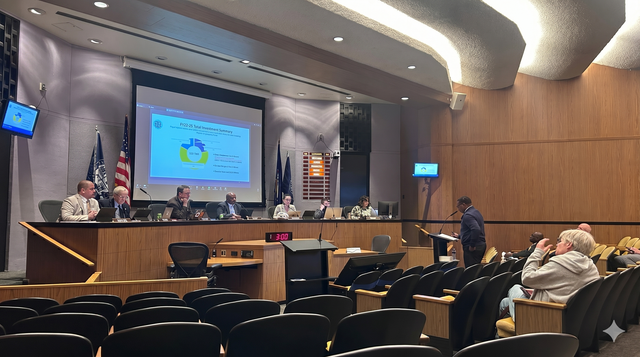
Antoine presenting annual report on compliance and management of Charlottesville Affordable Housing Fund, and housing pipeline updates (2025) - Photo credit: Erin O'Hare/Charlottesville Tomorrow.
Here's what that costs: the National Low Income Housing Coalition found that 79% of extremely low-income households still face severe cost burdens in states that have invested heavily in affordable housing programs. Investment is flowing. Impact is not being captured. When you can't prove what your capital is doing, you cannot defend it to funders, to the council, or to the community that was promised outcomes.
When asked about the dashboard he used to track nearly $60 million in Housing Investment, Antoine notes, "The dashboard was never the goal."
The goal was a governing body that could see around corners and act before the curve, not after.
The result: $58.77M documented. 938 units tracked. A council that called it "beyond our previous capabilities." A city on track to exceed its $100M housing commitment by $20M.
You "It's a mirror, a reflection, of how we're doing."— Antoine M. Williams, Charlottesville City Council, April 21, 2025 Charlottesville Tomorrow →
Systems Evaluation & Operational Risk
Policy Development & Implementation
Capital Mobilization & Partnerships
Fiscal Oversight & Budget Administration
01
Investment Performance Tracking
You need visibility before accountability is demanded of you.
Antoine designs and builds real-time dashboards and reporting systems that give decision-makers live insight into portfolio performance, compliance status, and risk before an auditor or council member asks. The architecture he has built handles multiple simultaneous federal funding streams, surfaces portfolio risk earlier, and produces executive-ready narratives without a week of preparation.
Built for: Municipal housing offices, CDFIs, foundations managing multi-funder housing portfolios
02
Public-Private Partnership Structuring
12:1 leverage ratios don't happen by accident.
It happens by design.
Antoine structures financing packages that use public dollars to mobilize private investment at scale. He has administered $280M+ TIF portfolios, revised rebate programs to include performance-based vendor accountability, and negotiated the partnership terms that keep complex deals from collapsing under compliance or political pressure. He knows how to make a deal work for all three parties at the table: the developer, the funder, and the community.
Built for: CRAs, economic development authorities, municipalities, CDFIs, mission-driven developers
$12:1 leverage ratio achieved
Mobility-Housing Nexus Strategy, Research & Design
Housing and transportation aren't separate silos. We conduct the analysis and build the partnerships to bridge the gap between the roof and the road, so you stop losing essential workers to $400 car repairs.

In transit-limited neighborhoods, unemployment is 4.5 percentage points higher than in transit-rich neighborhoods (Urban Institute, 2023).
Every $1 invested in connected mobility returns +$5 or more in regional GDP (APTA, 2020). For logistics workers, healthcare aides, and teachers, the essential workforce that keeps a community functioning, transportation costs can reach 25% of total household income. A single $1,000 car repair sits between stability and a missed mortgage.
Your workforce is telling you something. Are you hearing it
The nurse who takes three buses to a shift that starts at 6 a.m. The logistics worker who loses a job over a $400 repair he couldn't afford. The teacher who turned down the position because the commute from the only unit she could afford would have cost her two hours a day she didn't have.
38 million ALICE households (Asset Limited, Income Constrained, Employed), transportation costs can reach 25% of total household income. A single $1,000 disruption can separate stability from a missed mortgage payment. Shorter commutes can raise children's future income by 7% (Equality of Opportunity Project). This is not a transit problem. It is not a housing problem. It is an Economic Mobility, and it shows up as workforce instability, GDP leakage, and communities that cannot hold the workers they need to function.
Research & Development
04
Mobility-Housing Capacity
You cannot fix the gap between the roof and the road until you can see exactly where it is in your community.
Antoine conducts a structured analysis of your locality's comprehensive or strategic plan, identifying precisely where housing investment and transportation infrastructure are misaligned and quantifying the costs of that misalignment in workforce attrition, economic output, and institutional risk. The output is not a research brief. It is a decision-ready briefing in the language your elected officials, department heads, and development partners can act on.
In his analysis of dozens of comprehensive plans, the most consistent finding is that transportation and housing chapters don't reference each other at all.
Built for: Municipalities, MPOs, economic development agencies, regional planning bodies, and professional service firms
05
Urban Transit Systems
Local governments face a structural problem that research has clearly documented: they cannot innovate at the pace the market requires, not because of incompetence, but because of mandates, procurement constraints, and talent competition with the private sector. It organizes support for essential workers across three layers:
- everyday access gaps,
- disruption recovery, and
- continuity pathways, when transportation failures threaten income stability.
The advisory engagement helps municipalities, employers, and workforce organizations develop policies, partnerships, and funding to enhance community coordination, showcasing the effective implementation of practical research and development both within and beyond government roles.
Built for: municipalities, logistics employers, healthcare systems, workforce development boards, and organized bodies
06
Workforce Stability Initiatives
Your turnover rate is telling you something your HR data is not capturing.
Annual turnover in hospitality runs 70–84%. Nursing homes: 53.3%. Retail: 58–63%. SHRM puts the average replacement cost at $4,700 per worker.
A measurable portion of that attrition traces directly to transportation instability, missed shifts, scheduling conflicts with transit, and commute costs that erode net wages to the point where the job stops paying.
Antoine designs programs that convert replacement cost into a retention investment: housing benefit structures, transit partnerships, and mobility coordination, all built into a workforce-stability offering employees can actually use.
Built for: high-turnover-sector employers, workforce development boards, economic development agencies
Policy Leadership & Redevelopment Execution
What you get: someone who has managed the budget, protected the investment, convened the coalition, and still had to face the community at the end of it. $330M+ in catalyzed investment across 20 years. The methodology is specific because the experience was.
Coalition meetings where everyone agrees and nothing moves. Redevelopment plans that stall between planning and permitting. Federal grants awarded and not deployed. Capital committed in press releases and idle in accounts.
This is what institutional friction looks like — not dramatic failure, but slow stall. The cause is almost never the strategy. It is alignment. The developer, the funder, and the community are in separate rooms having separate conversations about the same project, and no one has built the architecture to connect them.
Management
07
Redevelopment Portfolio
A Tax Increment Financing (TIF) portfolio is a set of political, financial, and community commitments that must be managed simultaneously.
Antoine administered a $12.5M annual budget and $280M+ TIF pipeline at the Fort Myers Community Redevelopment Agency, managing developer negotiations, revising the rebate program to include performance-based vendor accountability, and protecting $200M+ in private investment through market pressure and political complexity.
He has navigated high-stakes permitting and land-use entitlements in downtown Miami and kept major mixed-use developments on schedule despite every reason to slip. This is execution-level work, not advisory.
Built for: CRAs, urban renewal authorities, municipalities managing large-scale TIF portfolios
08
Capital Activation & Grant
Capital that is not moving is not just idle. It is a liability to every stakeholder who is committed to it.
The most common cause of stalled capital is not a shortage of funding. It is a shortage of alignment — stakeholders who have not agreed on the story the capital is supposed to tell, reporting structures that cannot satisfy compliance, or program architectures that were not built to absorb the money at the pace it arrived.
Antoine has managed CDBG, HOME, ESG, and CARES Act streams simultaneously under audit-ready compliance, mobilized $22.9M in federal workforce funding, and administered $10M+ annual affordable housing funds. If the capital is committed and not moving, this is the engagement.
Built for: municipalities, CDFIs, foundations, nonprofits administering federal or multi-funder grants
09
Policy-to-Public Impact
Your housing ordinance passed. Now it needs to actually build something.
The gap between enacted policy and community impact is where most housing strategies stall. Antoine has drafted Land Bank Authority frameworks and Affordable Housing Tax Abatement programs, and then run the implementation. Stakeholder alignment. Program launch. Performance tracking. If your locality has passed a development code update, an inclusionary zoning ordinance, or a workforce housing initiative and the needle hasn't moved, this is the engagement.
Antoine has managed CDBG, HOME, ESG, and CARES Act streams simultaneously under audit-ready compliance, mobilized $22.9M in federal workforce funding, and administered $10M+ annual affordable housing funds. If the capital is committed and not moving, this is the engagement.
Built for: Localities with passed housing policy and stalled implementation; planning departments; housing authorities
The Resilience Engine: Securing Human Infrastructure
Your most critical systems aren't made of concrete or fiber optics. They're made of people.

A 911 dispatch system is only as reliable as the personnel who power it. When your essential workforce — EMTs, nurses, technicians — are pushed to the edges of your geography by housing and transit costs, your civic check engine light is flashing. Antoine partners with high-stakes jurisdictions to map these vulnerabilities and build the human infrastructure required to convert instability into resilience.
Right now, Virginia is the epicenter of this exact crisis. There is a collision between the high-utility demand for data centers (projected at $40B in economic impact) and the high-touch needs of public services. Land entitled for housing is being outbid for server development at multiples that residential builders cannot match, contributing to a documented regional housing shortfall of over 75,000 units.
Antoine works with regional leaders to navigate this complexity, ensuring that massive infrastructure investments don't cannibalize the human capital required to run the community.
[1] NVTC, 2025 · [2] Better Cities Project, 2024
Design
10
Operational Infrastructure
Governance, reporting, and accountability frameworks that allow complex programs to operate at scale under public and funder scrutiny. Antoine built Charlottesville's first housing investment-tracking system, revised Fort Myers CRA's vendor-accountability protocols, and established coalition operating rhythms for multi-stakeholder initiatives. The output passes a federal audit and briefs a city council in the same week.
Built for: regional coalitions, public-private partnerships, multi-funder initiatives, economic development authorities
11
Crisis-to-Predictive Stability
Drawing on command experience through four major hurricanes and FEMA ICS protocols, Antoine designs the continuity frameworks that convert reactive crisis response into predictive operational stability. Applicable to jurisdictions recovering from infrastructure outages, workforce disruptions, or natural disaster exposure.
Built for: regional coalitions, public-private partnerships, multi-funder initiatives, economic development authorities
12
Real-time ROI Dashboard
Custom dashboard systems that turn fragmented program data into auditable, decision-ready transparency for executive leadership, funders, and legislative bodies. Includes grant outcome tracking, donor transparency portals, and ROI reporting frameworks built to withstand public scrutiny.
Built for: regional coalitions, public-private partnerships, multi-funder initiatives, economic development authorities

Community Development & Planning Question/ Case Study
When a County Grows Its Tax Base Faster Than Its Workforce Can Afford to Live There, How Does It Cover the Difference?

Across Virginia, the rapid expansion of hyperscale data centers is creating a new generation of fiscal, infrastructure, and workforce-planning questions for local governments. Culpeper is actively navigating this question now.
The county has made a considered decision to concentrate industrial-scale data center development in the Culpeper Tech Zone a 1,000-acre designated corridor that reflects exactly the kind of deliberate, community-led planning that distinguishes responsible growth from reactive development.
County leadership developed the CTZ to address community concerns through intentional zoning, infrastructure planning, and workforce development, and the approach has drawn notice as a model for how rural communities can define their own terms for growth.
The planning challenge that follows is predictable, measurable, and far easier to address early than after operational strain begins compounding across workforce, infrastructure, and public-service systems.
The Gap Between Investment Scale and Wage Scale
Across Virginia, investment scale is accelerating faster than workforce accessibility. In Culpeper County, the income needed to afford a median-priced home is now roughly 2.6 times the average annual wage for jobs in the county. In neighboring Rappahannock County, that gap rises above 3.5x. The issue is not simply housing or commuting; it is whether workforce systems, infrastructure, and public-service capacity are evolving at the same pace as economic growth.
The Workforce Resilience Model™
The Workforce Resilience Model™ evaluates how growth patterns interact with workforce accessibility, transportation systems, public-service delivery, and long-term municipal operating capacity. The framework helps local governments identify where infrastructure investment, workforce geography, and service-demand pressures may begin to diverge before those pressures become more visible in recruitment challenges, response systems, capital planning, or operational strain.
TRACK A
Workforce Infrastructure Mapping
In high-growth jurisdictions, workforce pressures often emerge long before they appear in staffing reports, emergency response systems, or service-delivery metrics. This engagement helps local governments identify where workforce accessibility, infrastructure capacity, and future growth patterns may begin diverging over time.
Areas of Analysis
- Public safety and EMS workforce accessibility
- Utility and infrastructure workforce geography
- Regional commuting and labor-shed patterns
- Workforce accessibility near industrial corridors
- Housing pressure near growth centers and talent hubs
The Engagement:
A structured planning and infrastructure analysis integrating workforce, housing, transportation, and growth data into a jurisdiction-specific operational assessment.
The Output: an executive briefing designed to support.
- capital planning,
- infrastructure sequencing,
- workforce-support strategies,
- development negotiations,
- and long-range growth coordination.
TRACK B
Workforce Growth Infrastructure Strategy
Large-scale industrial growth reshapes more than the tax base. Over time, it also influences workforce demand, infrastructure systems, commuting patterns, and long-range operational capacity. This engagement helps jurisdictions align growth strategy with the workforce and public systems required to sustain it.
Example Areas of Strategy
- Workforce-supporting infrastructure investment
- Housing and economic-development coordination
- Public-private partnership alignment
- Infrastructure sequencing and CIP coordination
- Growth-corridor workforce strategy
- Workforce retention and recruitment support systems
The Engagement: A strategic growth and infrastructure assessment aligning workforce accessibility, economic-development priorities, and long-range operational planning within high-growth jurisdictions.
The Output: a strategic roadmap designed to support.
- workforce retention and recruitment strategies,
- infrastructure investment coordination,
- public-private partnership alignment,
- growth-corridor planning,
- and long-term workforce and service sustainability.